DPG Media and hacks the student algorithm in new campaign
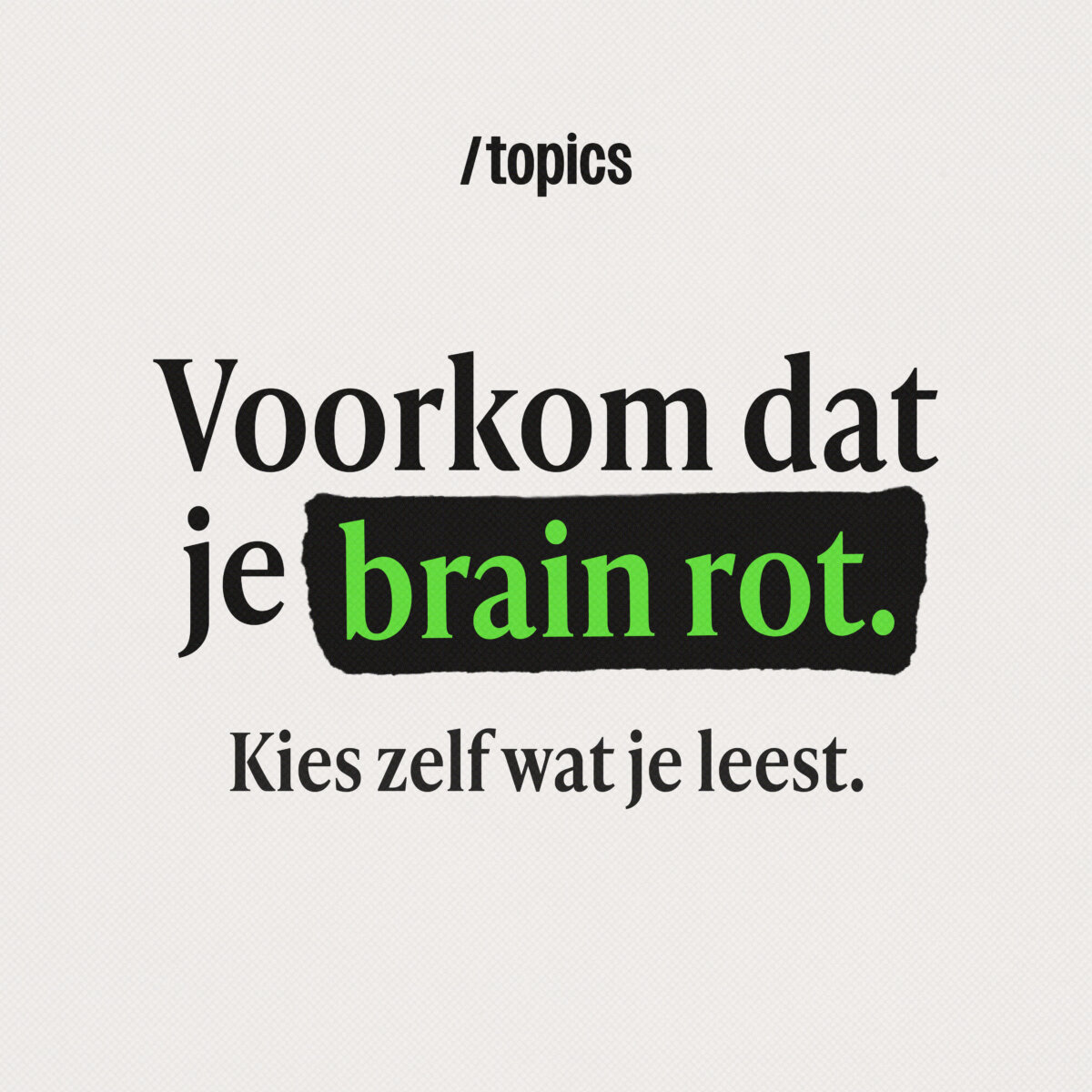
With its new /topics campaign, DPG Media challenges students to rethink their digital consumption habits by positioning quality journalism as the antidote to endless algorithm-driven scrolling.
DPG Media today launches a provocative activation under the name /topics, an app-only free news subscription specifically designed for students. Positioned as the antidote to “brain rot” – the mental decline caused by endlessly consuming shallow content – the campaign challenges students aged 16 to 25 to reconsider their digital diet. Developed by social-first agency Home, the campaign gives students direct access to the best Dutch quality journalism through a free subscription.
In a world where journalism is losing ground to endless scrolling, memes and clickbait, students’ news consumption has become almost entirely controlled by Big Tech. Where journalism once served as a compass for critical thinkers, algorithms now determine what an entire generation sees, thinks and feels. The new campaign by DPG Media and Home positions quality journalism as a much-needed remedy against this “brain rot.” The message is twofold: your attention has been hijacked by algorithms, but with /topics, you can take back control and choose what you read.
Journalism as an Antidote
Rather than fighting social media, the concept uses the logic of the algorithm itself to create impact within students’ own digital environment.
“No one is intrinsically motivated to become less intelligent, but today’s screen culture causes that unconsciously,” says Miles Momoh, Cultural Strategist at Home. “We’re not fighting against social media — we’re hacking into it. With this campaign, we confront students with the reality that their attention has become a product, while positioning /topics and its free online news subscription as the tool to reclaim control.”
A social-first approach
Home acted as the strategic and creative partner behind the social-first campaign. The campaign is rolled out through a full-funnel strategy: from provocative awareness through targeted (D)OOH placements at universities and schools and online videos, to social ads and collaborations with Dutch and Belgian creators.
By reaching the audience within their own digital habitat, the campaign translates the concept of “brain rot” into the language of students themselves, lowering the barrier to reliable information.
- Online video: https://www.tiktok.com/@topics_nl/video/7611123407387692310
- Social-native video: https://www.tiktok.com/@topics_nl/video/7611123165930048790